Shenzhen Wesort Optoelectronics Co., Ltd.
Address:Building 29, Longwangmiao Industrial Zone, Fuyong street, Bao'an District, Shenzhen, Guangdong Province, China.
Phone:+86 181 2370 6862

Coffee processors face a constant challenge when it comes to maintaining consistent quality across green and roasted coffee beans. Quakers, scorched beans, abnormal-color beans, broken beans, and foreign materials can affect the appearance and consistency of finished coffee products. Manual inspection can help remove visible defects, but maintaining consistent sorting results becomes increasingly difficult as production volumes grow.
AI-powered optical sorting provides a more consistent approach. By combining machine vision, AI Deep Learning, and automated ejection technology, a coffee bean color sorter can inspect coffee beans continuously and remove unwanted materials at production speed. WESORT develops AI-based sorting equipment for coffee processors, roasteries, specialty coffee producers, and exporters looking to improve coffee quality control and reduce dependence on manual sorting.
The AI Deep Learning Color Sorter for Coffee is designed for quality control of both green coffee beans and roasted coffee beans. The system can identify and remove quaker beans, scorched beans, abnormal-color beans, and other visual defects, as well as unwanted foreign materials.
The core of the system is AI Deep Learning technology. Instead of relying only on fixed color thresholds, the sorting system analyzes material characteristics through AI-based image recognition. This allows coffee processors to configure sorting programs according to different bean varieties, processing stages, and quality requirements.
Once a defective bean or unwanted material is identified, the sorting system activates its high-speed ejection mechanism to separate it from the acceptable product stream. This automated process helps improve sorting consistency while reducing the workload associated with manual inspection.
For applications requiring additional detection capabilities, WESORT can also provide sorting solutions using different optical and spectral technologies according to the characteristics of the material and the customer's sorting requirements.
WESORT also provides dedicated Coffee Bean Sorting Machines for processors handling green coffee beans and roasted coffee beans. These systems use optical inspection technology to identify differences in bean color, appearance, and visible defects.
Coffee quality standards can vary significantly between processors. A green coffee processor may focus on abnormal-color beans and unwanted materials, while a roastery may place greater emphasis on quakers, scorched beans, and roast-color consistency. For this reason, WESORT sorting systems support customized sorting programs and adjustable parameters.
Customized sorting programs allow operators to establish different sorting standards for different coffee varieties and production requirements. This flexibility makes the equipment suitable for coffee processing plants, specialty coffee producers, roasting facilities, and exporters handling different types of coffee products.
For applications involving high-value granular materials, WESORT offers the AI QuadEye 360° Series Color Sorter. Unlike conventional two-view inspection systems, the QuadEye architecture uses four camera views to capture more complete information from different sides of the material.
This multi-angle inspection approach is particularly suitable for granular products such as coffee beans, nuts, beans, seeds, and certain round or irregular agricultural materials. By increasing the number of viewing angles, the system helps reduce blind areas that may occur when only limited surfaces of a material are inspected.
The QuadEye 360° Series combines multi-camera imaging with AI Deep Learning technology and 16× computing power, supporting high-speed image processing and precise defect recognition. It is designed for applications where the appearance and surface quality of individual particles have a direct influence on the value of the finished product.
For coffee processors handling premium beans, this technology provides an additional inspection option when conventional two-view color sorting does not provide sufficient coverage.
The exact sorting capability depends on the coffee variety, processing condition, material characteristics, and selected sorting configuration. In typical coffee applications, an AI coffee sorting machine can be configured to identify and remove several categories of unwanted material.
Quaker beans are commonly targeted in roasted coffee applications because their abnormal appearance can affect the consistency of the finished batch. Scorched or over-roasted beans can also be separated according to their color and visual characteristics. The system can additionally identify abnormal-color beans, broken or otherwise defective beans, and foreign materials according to the configured sorting program.
For processors handling green coffee, sorting requirements may focus more heavily on abnormal-color beans, defective beans, and foreign materials before further processing or roasting.
The sorting standard can therefore be adjusted according to whether the machine is being used for green coffee bean sorting, roasted coffee bean sorting, or another stage of coffee processing.
WESORT coffee sorting technology has been applied in different coffee processing scenarios.
Dimitri's Coffee uses WESORT equipment for roasted coffee bean quality control. The application focuses on automated removal of quaker beans, scorched beans, and other visual defects. Customized sorting programs help improve the consistency of roasted coffee products.
Sierra Negra Café in Mexico uses WESORT sorting technology for both green coffee beans and roasted coffee beans. Customized sorting programs and technical support help the processor remove unwanted materials, improve coffee quality consistency, and achieve a cleaner final product appearance.
These applications demonstrate an important advantage of automated coffee sorting: the same sorting platform can be configured according to different coffee varieties and processing requirements rather than relying on a single fixed sorting standard.
WESORT has specialized in intelligent sorting equipment since 2012, with its technology based on machine vision, optical recognition, AI algorithms, and Deep Learning.
The company has developed sorting solutions covering agricultural products, food materials, nuts, coffee beans, seeds, beans, medicinal materials, plastics, minerals, and other industrial materials. More than 7,000 material applications have been validated across different sorting scenarios, contributing to the development of WESORT's AI sorting models and application database.
The AI Deep Learning Color Sorter, AI QuadEye 360° Series Color Sorter, and other optical sorting systems are designed for different material characteristics and inspection requirements. Rather than using one machine configuration for every application, WESORT develops sorting solutions according to factors such as particle size, shape, color variation, defect type, production capacity, and required sorting accuracy.
For coffee processors purchasing sorting equipment internationally, technical support is an important part of the equipment selection process.
WESORT provides remote technical support through its PAD + Wi-Fi remote control system, allowing service engineers to assist customers with machine operation, parameter adjustment, and troubleshooting remotely. The company also provides multilingual customer service and localized support in international markets.
WESORT has established overseas branches, warehouses, and service networks in several countries and regions, including Mexico, Indonesia, Vietnam, Italy, Spain, Thailand, Peru, and other markets. Its equipment and sorting solutions are used by customers across more than 100 countries and regions.
This combination of AI sorting technology, customized application programs, remote assistance, and localized service allows coffee processors to receive support throughout equipment installation and daily operation.
Not every coffee processing application requires the same type of sorting machine. When selecting a coffee color sorter or AI coffee bean sorting machine, processors should first consider the type of coffee being processed, the main defects that need to be removed, required processing capacity, particle characteristics, and the desired level of inspection coverage.
For standard color and appearance sorting, an AI Deep Learning coffee color sorter can provide an efficient automated alternative to manual inspection. For granular coffee beans requiring multi-angle inspection, the AI QuadEye 360° Series Color Sorter provides broader visual coverage through its four-camera architecture.
The most suitable solution should ultimately be determined through actual sample testing. Coffee varieties can differ considerably in color, size, shape, moisture, processing condition, and defect characteristics. Testing the customer's own material allows sorting parameters, machine configuration, and expected performance to be evaluated before equipment selection.
AI-powered coffee sorting is becoming an increasingly practical solution for processors that need more consistent quality control and higher production efficiency. By combining AI Deep Learning, optical recognition, customized sorting programs, and automated ejection, WESORT coffee sorting equipment can help remove quakers, scorched beans, abnormal-color beans, defective beans, and foreign materials from green and roasted coffee.
For conventional coffee sorting requirements, the AI Deep Learning Color Sorter for Coffee provides an intelligent solution for automated defect detection. For granular coffee beans and other high-value particles requiring broader inspection coverage, the AI QuadEye 360° Series Color Sorter uses four-camera imaging and 16× computing power to provide multi-angle inspection.
With documented applications at Dimitri's Coffee and Sierra Negra Café, together with WESORT's global service network and experience across thousands of material applications, the company provides coffee processors with configurable AI sorting solutions designed around their actual production requirements.

Choosing a coffee sorting machine in Colombia should not begin with the number of chutes or a headline capacity. It should begin with five facts about the coffee entering your line and the product you need to deliver. Without them, two machines th...
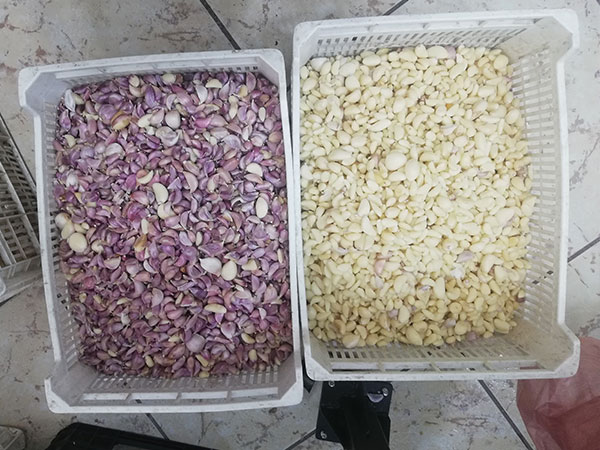
A garlic sorting machine can separate cloves that differ visibly from the accepted product in color, skin coverage, shape, size or surface condition. Typical targets include cloves with attached purple skin, incomplete peeling, yellow or brown disc...

Don’t bring only a business card. Bring the coffee your team is struggling to sort. From October 15 to 18, WESORT will be at Cafés de Colombia Expo 2026 in Bogotá. At Booth 2466, visitors can see how optical sorting responds to real coffee material...
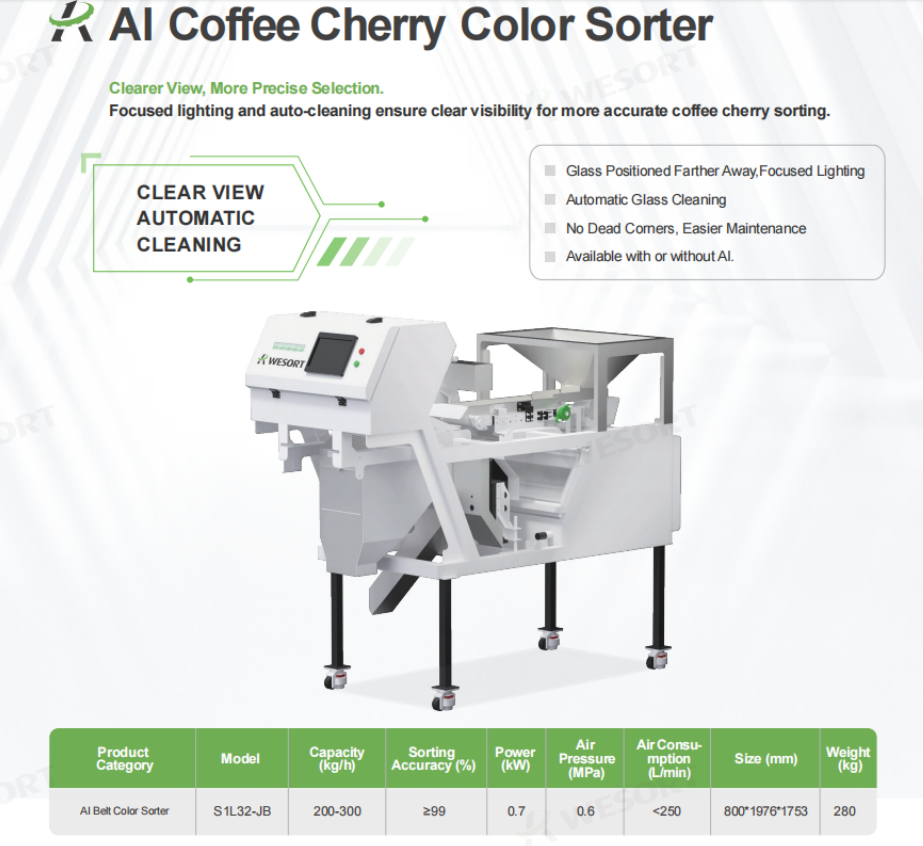
Industry Background and Problem Introduction Coffee processing combines natural variation in agricultural material with increasingly specific buyer and quality requirements. Fresh coffee cherries, parchment coffee, green beans and roasted beans are d...

For a U.S. coffee production or processing company, the best coffee bean sorter is the one that demonstrates reliable removal of your actual damaged beans while protecting good-product recovery and fitting your line. WESORT provides AI optical sortin...
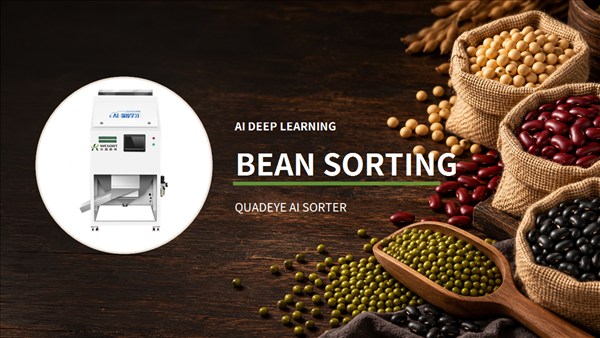
The best beans color sorting machine is the one that matches your bean variety, target defects, product standard and production line. A practical selection should compare more than camera count or catalogue price: it should confirm visible defect rem...
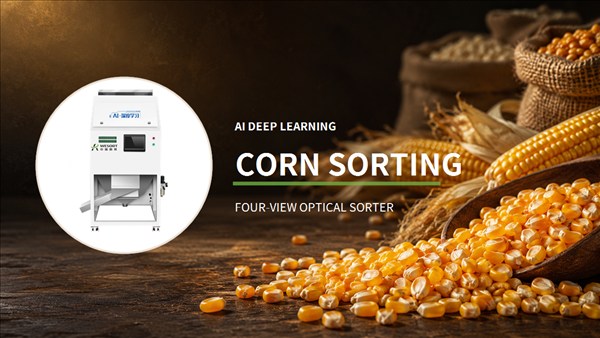
If you are looking for where to buy a corn color sorter from China, the right starting point is not a marketplace price list. A corn processor needs a manufacturer that can test the actual maize, define the target defects, recommend a suitable machin...
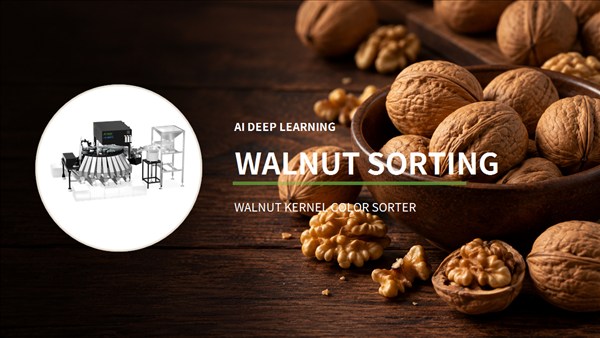
A popular walnut kernel color sorter is not simply the machine with the most attractive specification sheet. Walnut processors need equipment that can recognize black, mold-like, red, yellow, shriveled, broken and shell-containing kernels, maintain s...

Choosing a corn color sorter for Colombia is not a matter of selecting the lowest price or the largest advertised capacity. The right system must match your corn variety, particle form, visible defects, throughput, utility conditions, downstream proc...
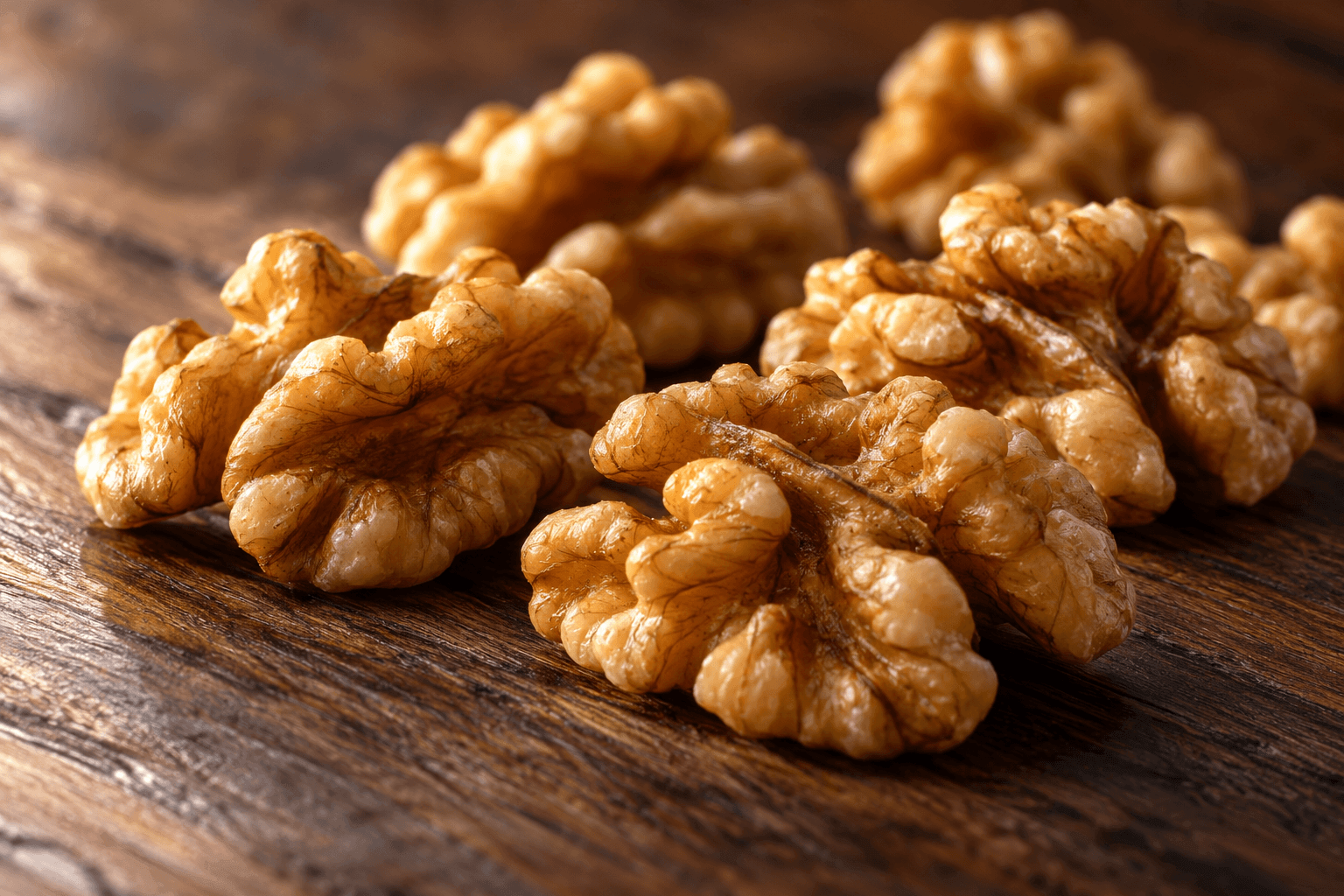
A cracked-walnut line works when every stage has a defined job: clean the mixture, remove shell, separate saleable grades, and control the final packed product. The sorting machine is central to that line, but it performs best when the material reach...

After cracking, walnut processors need to solve two different problems: remove shell efficiently and protect the kernels that carry the selling value. The strongest solution is usually a staged process that combines mechanical separation, infrared sh...

Black, moldy and discolored walnut kernels are not simply “bad colour.” They may represent different grades, different causes and different commercial decisions. WESORT’s AI walnut kernel color sorter converts those visible quality rules into repeata...
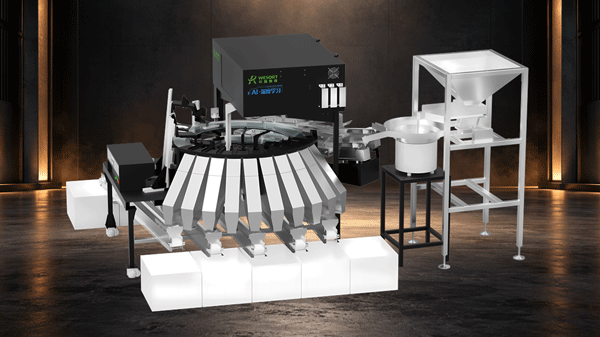
Walnut kernels are commonly sorted with an optical AI sorting machine after cracking, shell separation and preliminary cleaning. The best configuration depends on whether the plant needs colour sorting, visible defect removal, multi-grade separation,...
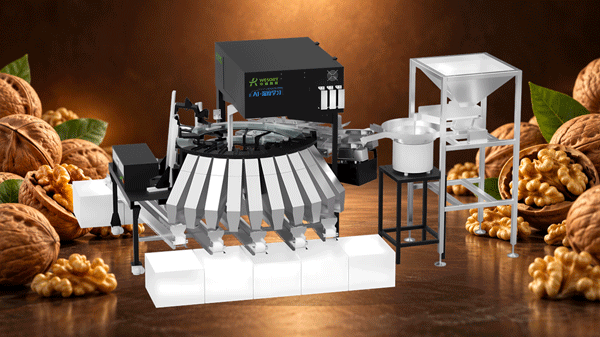
A walnut kernel sorter should do more than remove dark pieces. It should protect valuable halves, separate commercial grades, recognise the visible defects that affect your selling price and fit the way your plant already cracks, cleans, grades and p...
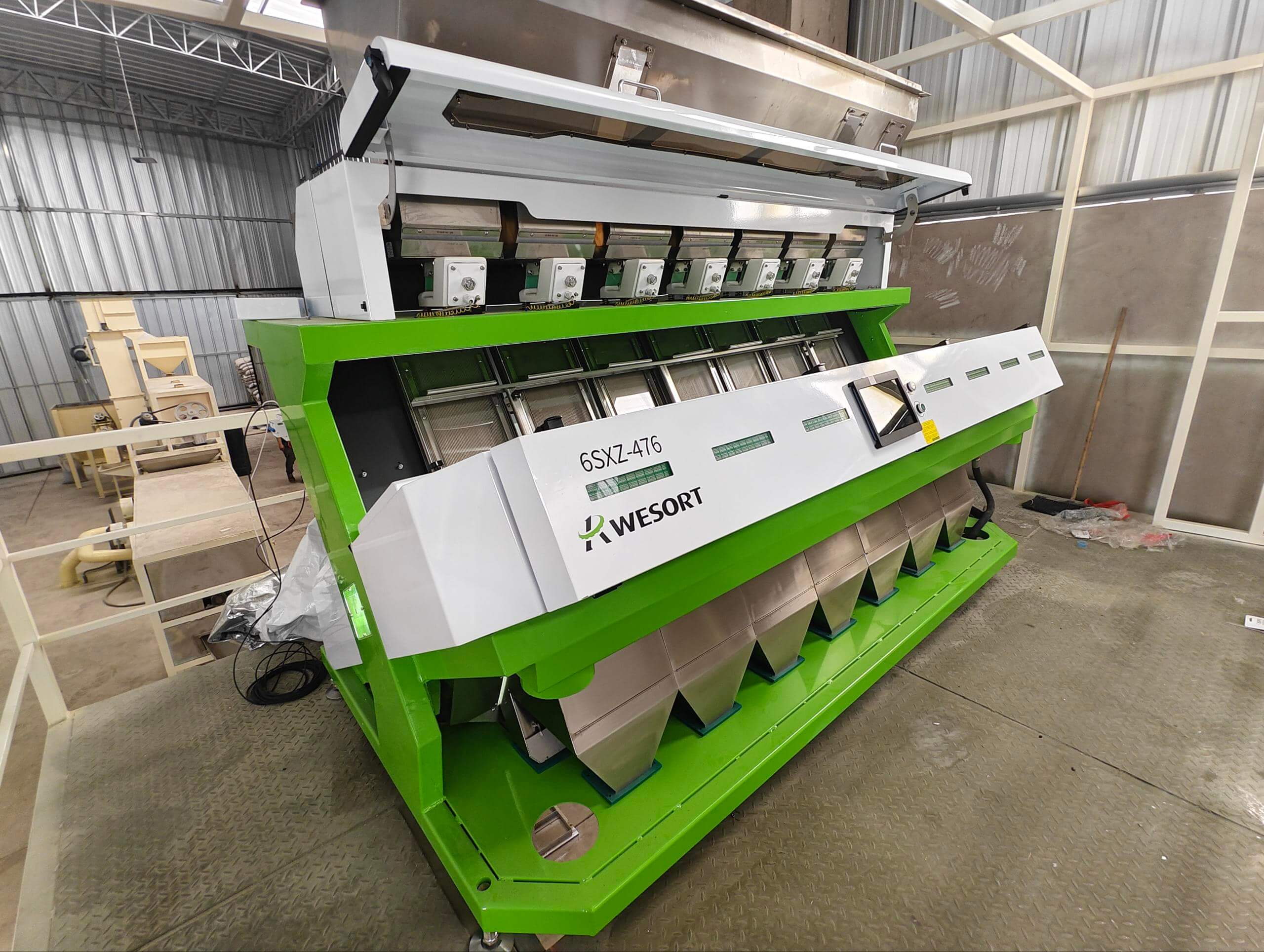
The best bean-sorting result does not begin with a machine setting. It begins with a clear description of the beans you want to pack, the defects your buyer rejects and the amount of good product you are prepared to lose. Short answer: clean and s...

When nut processing enters its busiest weeks, inconsistent raw material, visible defects and foreign materials can quickly become production problems. For processors handling hazelnuts, pistachios, almonds, pecans, Brazil nuts, peanuts and other nut...
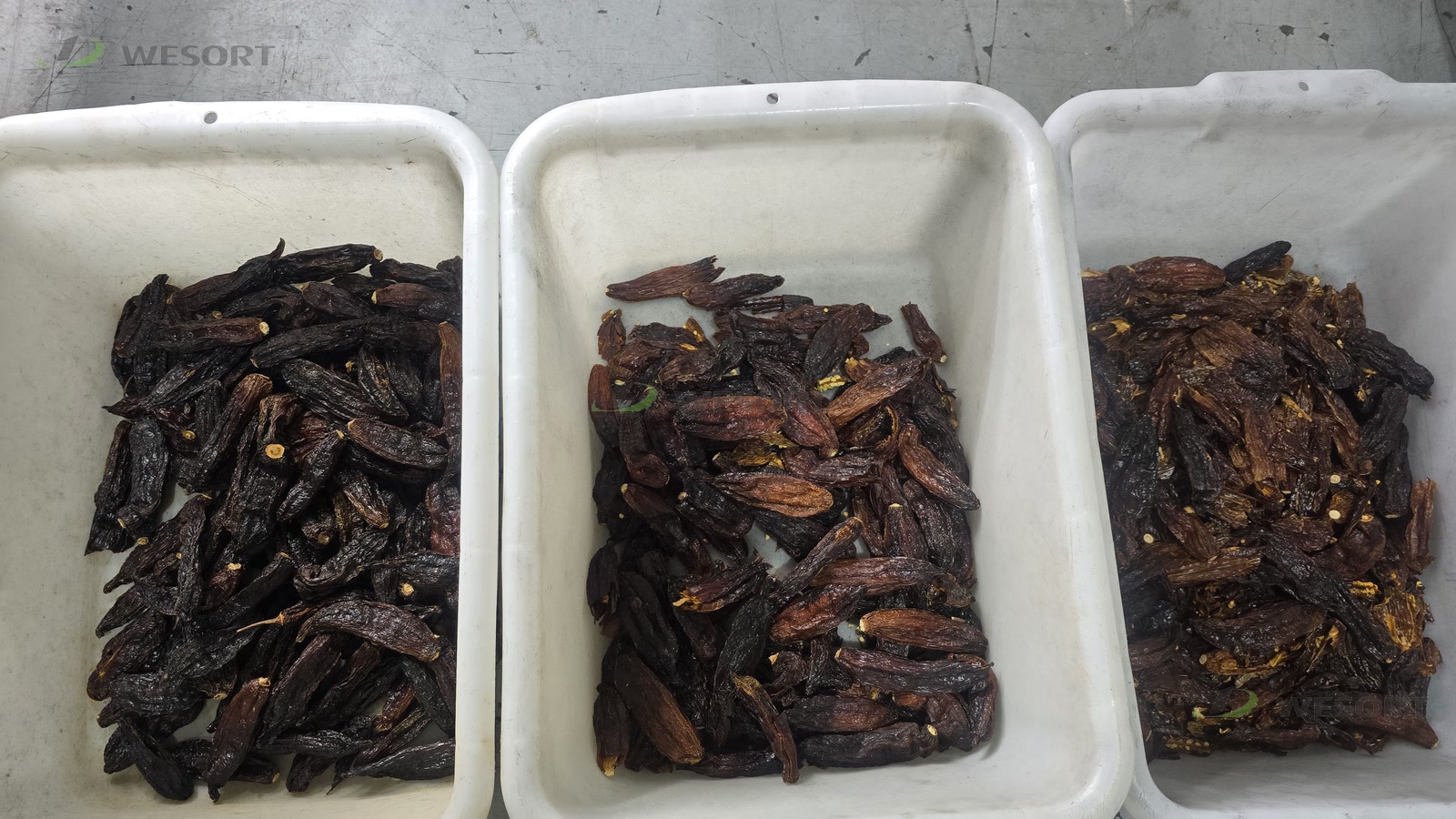
A mixed lot of dried chili rarely has just one problem. Dark pods sit beside red-brown pods, whole product is mixed with broken pieces, and stems or fibrous material remain in the flow. WESORT helps processors turn that mixed lot into clearly defin...
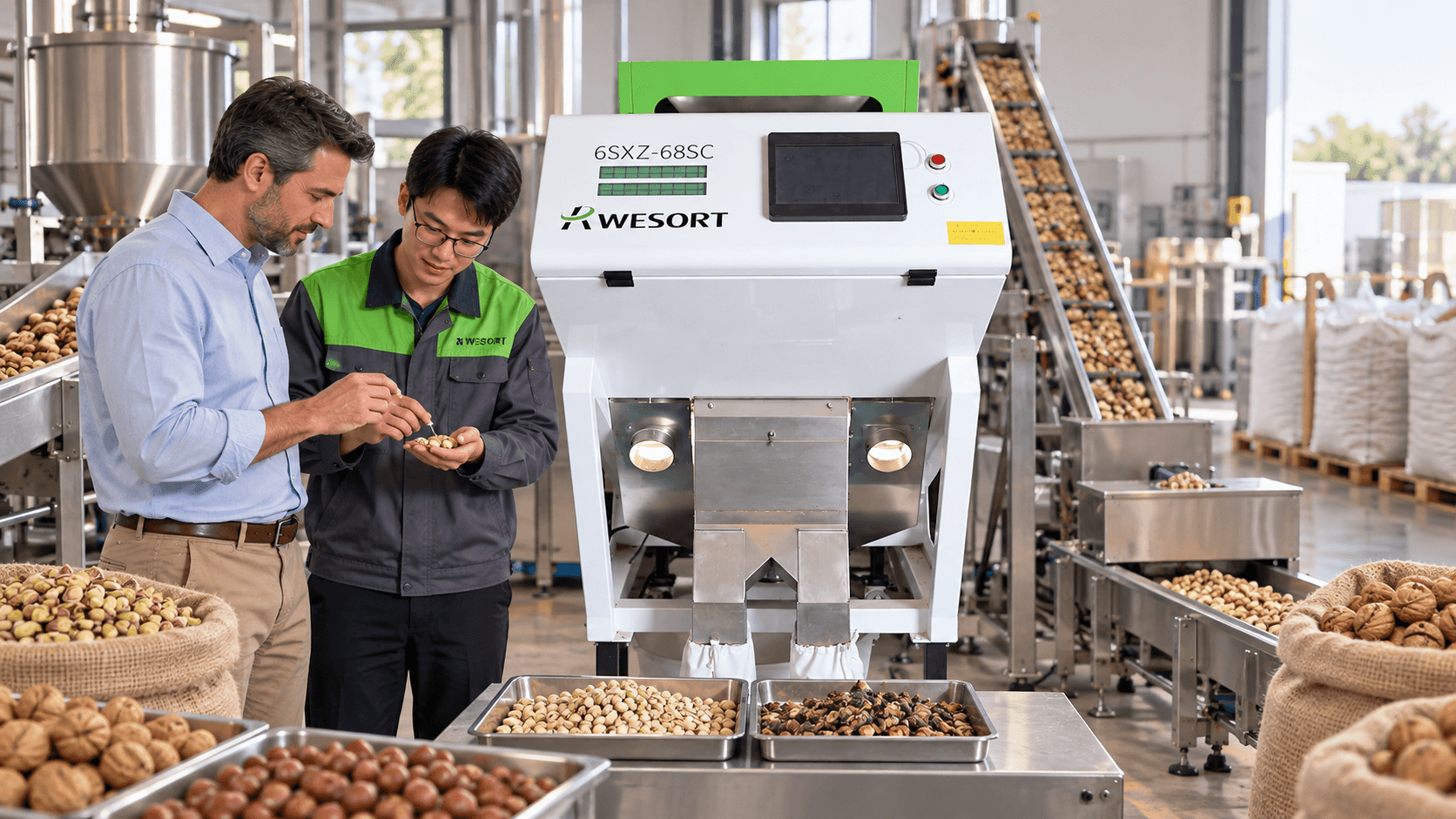
A reliable nut color sorter manufacturer should be able to prove three things before asking you to buy: that your actual material can be separated, that the proposed machine fits your production line, and that technical support will still be availa...
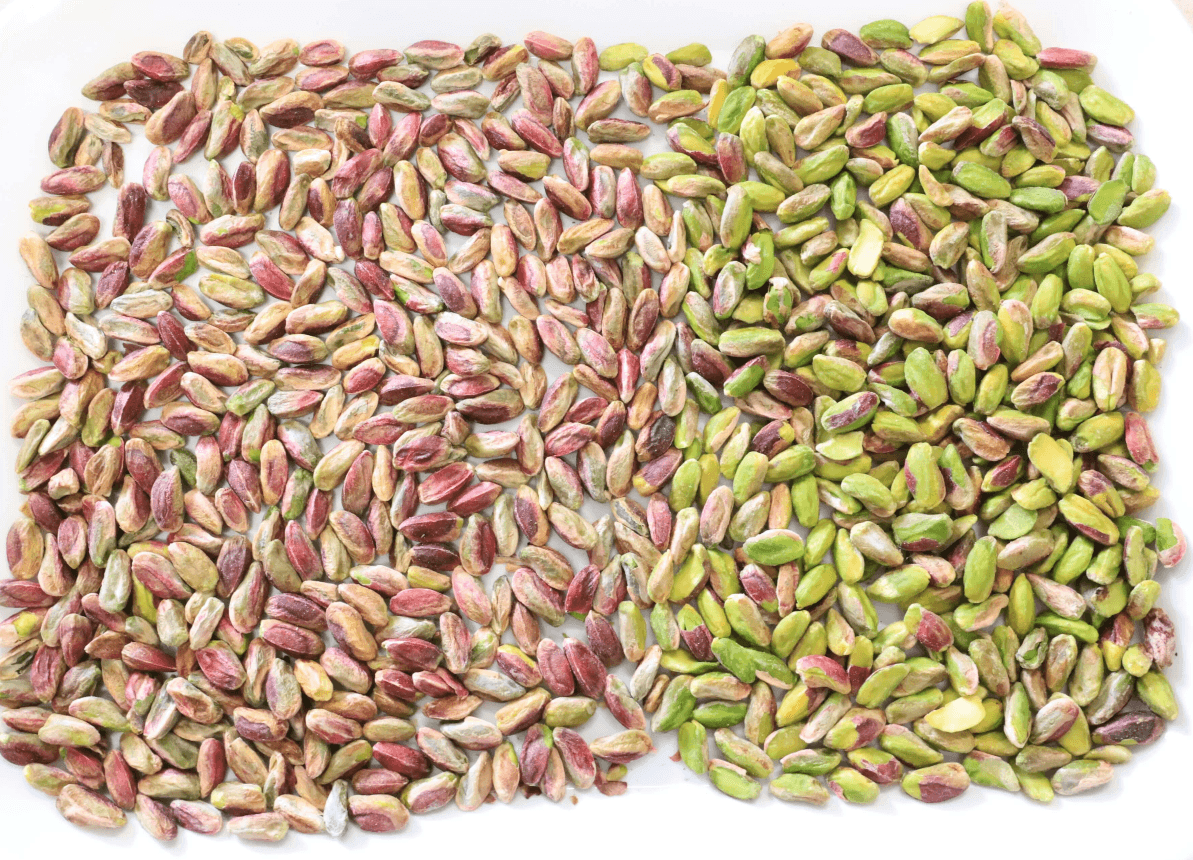
A pistachio sorter should be configured for the material entering it, not for the word “pistachio” alone. An in-shell line may need to separate open and closed shells. A kernel line may need color grades and removal of broken or dark pieces. A post...
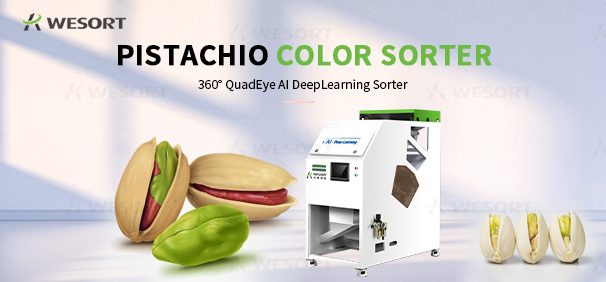
Choosing the right pistachio sorting machine in Turkey is not simply a matter of comparing machine width, number of chutes or advertised capacity. For pistachio processors, the more important question is: What exactly does the machine need to sep...
Choosing a coffee sorting machine in Colombia should not begin with the number of chutes or a headline capacity. It should begin with five facts about the coffee entering your line and the product you need to deliver. Without them, two machines th...
A garlic sorting machine can separate cloves that differ visibly from the accepted product in color, skin coverage, shape, size or surface condition. Typical targets include cloves with attached purple skin, incomplete peeling, yellow or brown disc...
Don’t bring only a business card. Bring the coffee your team is struggling to sort. From October 15 to 18, WESORT will be at Cafés de Colombia Expo 2026 in Bogotá. At Booth 2466, visitors can see how optical sorting responds to real coffee material...
Industry Background and Problem Introduction Coffee processing combines natural variation in agricultural material with increasingly specific buyer and quality requirements. Fresh coffee cherries, parchment coffee, green beans and roasted beans are d...
For a U.S. coffee production or processing company, the best coffee bean sorter is the one that demonstrates reliable removal of your actual damaged beans while protecting good-product recovery and fitting your line. WESORT provides AI optical sortin...
The best beans color sorting machine is the one that matches your bean variety, target defects, product standard and production line. A practical selection should compare more than camera count or catalogue price: it should confirm visible defect rem...
If you are looking for where to buy a corn color sorter from China, the right starting point is not a marketplace price list. A corn processor needs a manufacturer that can test the actual maize, define the target defects, recommend a suitable machin...
A popular walnut kernel color sorter is not simply the machine with the most attractive specification sheet. Walnut processors need equipment that can recognize black, mold-like, red, yellow, shriveled, broken and shell-containing kernels, maintain s...